
Whether you’re filling industrial gas cylinders, supplying medical oxygen, maintaining LPG bottles for holiday parks, or carrying out routine cylinder inspections, detecting gas bottle valve leaks safely is a critical part of quality assurance.
A leaking valve can lead to product loss, unnecessary cylinder handling, operational delays and additional maintenance. More importantly, every cylinder leaving a filling plant or testing facility should be inspected using a consistent and reliable process.
For decades, Bicknell Engineering has worked alongside the industrial gas industry, designing precision-engineered solutions that support efficient cylinder inspection. Our Bicknell Bubbler has become a recognised valve leak detection system used by industrial gas companies and cylinder filling operations around the world.
In this guide, we explain how gas bottle valve leaks occur, how they have traditionally been detected, and why dedicated leak detection equipment can help organisations achieve a more repeatable inspection process.
Why Gas Bottle Valve Leak Detection Matters
Gas cylinder valves are designed to safely contain compressed gases under pressure throughout transportation, storage and use. However, like any mechanical component, valves can develop leaks over time.
Even a small valve leak may result in:
- Product loss
- Reduced cylinder pressure
- Increased operational costs
- Additional inspection and maintenance
- Delays in cylinder distribution
- Failed quality assurance checks
For organisations handling hundreds or thousands of cylinders every day, identifying leaks before cylinders leave the filling plant helps maintain operational efficiency and supports customer confidence.
What Causes Gas Bottle Valve Leaks?
Gas bottle valves experience continual use throughout their service life.
Leaks may occur due to:
- Normal wear of valve components
- Damaged seals
- Contamination around sealing surfaces
- Accidental impact during handling
- Ageing components
- Poorly maintained valves
Some leaks are immediately noticeable, while others are extremely small and cannot easily be detected through visual inspection alone.
This is why many industrial gas companies include valve leak testing as part of their cylinder quality assurance process.
Traditional Gas Bottle Valve Leak Detection Methods
Historically, some gas cylinder filling plants and testing facilities used manual leak detection methods that involved applying a leak detection solution around the valve outlet and visually checking for bubbles. However, this method is not considered best practice for many gas applications, as modern industry standards, cleanliness requirements and health and safety procedures require that no liquid comes into contact with the valve outlet or gas pathway, where it could introduce contamination. This is particularly important for medical oxygen, breathing gases and other high-purity gas applications, where maintaining the cleanliness and integrity of the valve is critical.
The Importance of Consistent Leak Detection
Effective leak detection is not simply about identifying obvious leaks.
It is about ensuring every cylinder is inspected using the same process, every time.
Consistency helps support:
- Quality assurance procedures
- Standardised inspection routines
- Operational efficiency
- Reliable cylinder release processes
- Customer confidence
For industrial gas suppliers, consistency across every inspection can be just as important as the inspection itself.
The Bicknell Bubbler – A Purpose-Built Solution
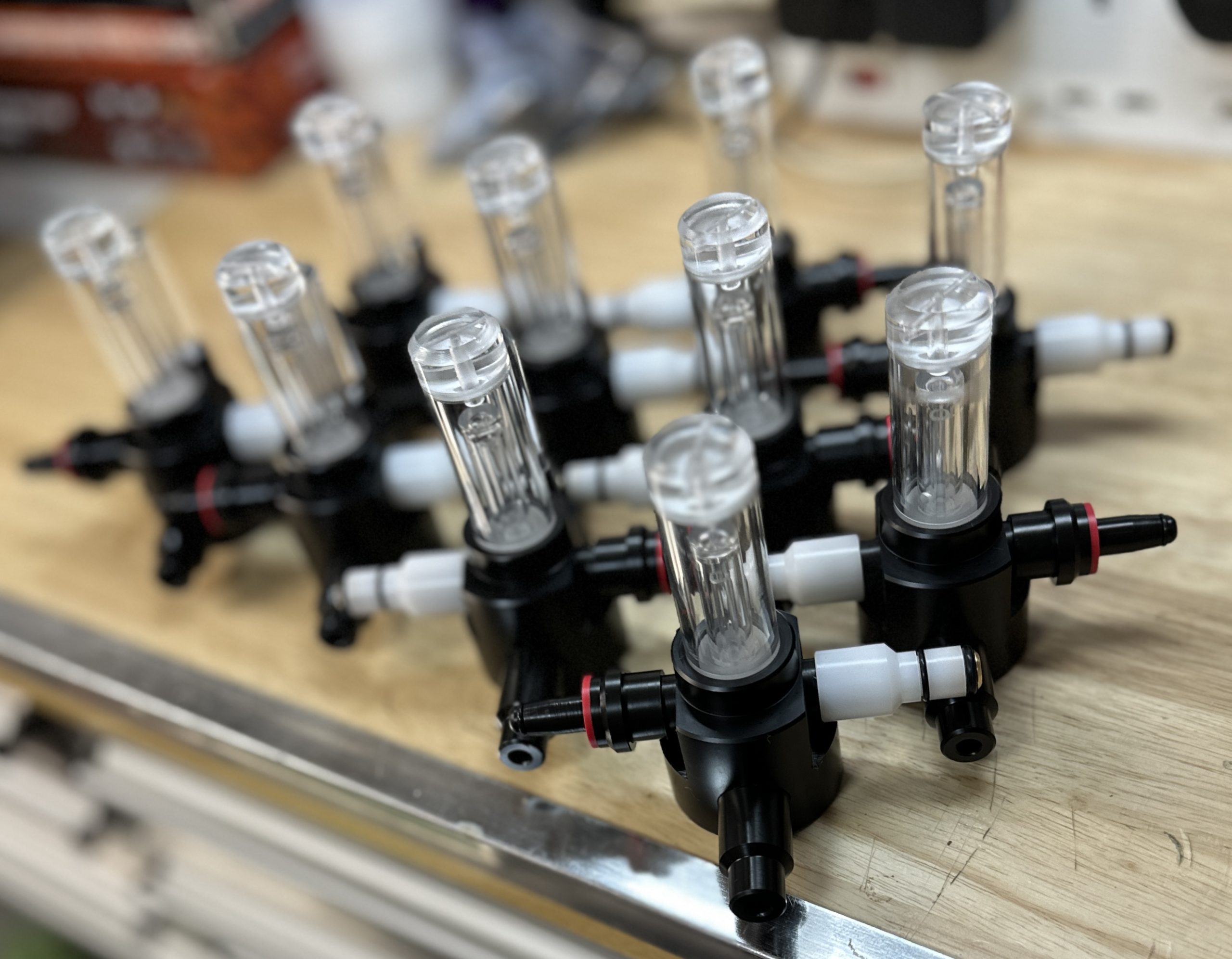
The Bicknell Bubbler has been specifically developed by Bicknell Engineering to provide a dedicated solution for gas bottle valve leak detection.
Rather than relying solely on manual inspection techniques, the Bubbler provides a repeatable process for checking gas bottle valves as part of routine cylinder inspection.
Its design supports organisations that process large numbers of cylinders by helping operators carry out valve leak detection using the same inspection method across their operations.
The Bicknell Bubbler has become an established solution for organisations involved in cylinder filling, maintenance and testing, where consistency and reliability are essential.
Cleanliness and Contamination Control for Medical Oxygen and Industrial Gases
A large proportion of Bicknell Engineering’s products are designed for the medical gas industry as well as industrial gases, and for both, cleanliness and contamination control are just as critical as leak detection itself. Industry standards require gas systems and valves to be protected from contamination, and introducing liquids into valve outlets can increase the risk of contamination if not properly controlled.
For medical gases, this aligns with the requirements of ISO 7396-1 (Medical Gas Pipeline Systems), ISO 15001 (Cleanliness for Oxygen Service) and HTM 02-01, all of which place a strong emphasis on cleanliness and preventing contamination in oxygen systems. For industrial gases, safe handling and maintenance practices are supported by legislation such as the Pressure Systems Safety Regulations 2000 (PSSR), the Health and Safety at Work etc. Act 1974 and COSHH 2002, with industry guidance from organisations such as the Compressed Gas Association (CGA) and the European Industrial Gases Association (EIGA) promoting clean, contamination-free practices.
This is where the Bicknell Bubbler is unique. Unlike traditional spray or liquid leak detection methods, the valve is sealed directly against the Bubbler, allowing any escaping gas to create visible bubbles in clean water contained within the unit, while no liquid comes into contact with the valve outlet or gas port. This provides a clean, repeatable and reliable method of leak detection that helps support compliance with industry best practice while reducing the risk of contamination.
This contamination-free method is one of the key features that sets the Bicknell Bubbler apart from conventional leak detection methods, making it suitable for both industrial and medical oxygen applications where safety, cleanliness and compliance are paramount.
Supporting Industrial Gas Operations
Reliable valve leak detection is important across many sectors that manage compressed gas cylinders, including:
- Industrial gas manufacturers
- Industrial gas distributors
- Cylinder filling plants
- Cylinder inspection and testing facilities
- Medical gas suppliers
- LPG suppliers and distributors
- Gas cylinder maintenance and refurbishment facilities
- Engineering and manufacturing businesses using compressed gases
- Holiday parks and leisure operators managing LPG cylinders
- Utilities and energy organisations
Whether cylinders contain oxygen, nitrogen, argon, carbon dioxide, LPG or other compressed gases, maintaining a consistent leak detection process helps support efficient day-to-day operations.
Why Precision Engineering Matters
Leak detection equipment is often used continuously in demanding industrial environments.
For this reason, durability, reliability and consistent performance are essential.
At Bicknell Engineering, our focus has always been on designing and manufacturing precision-engineered equipment that meets the practical needs of the industrial gas industry.
The Bicknell Bubbler reflects this approach by providing a dedicated valve leak detection solution designed for routine operational use.
Frequently Asked Questions
What is a gas bottle valve leak?
A gas bottle valve leak occurs when compressed gas escapes from the valve assembly rather than remaining safely contained within the cylinder.
Why should gas cylinder valves be leak tested?
Routine leak testing helps identify valve leaks before cylinders are transported, stored or supplied to customers, supporting quality assurance procedures.
How have gas bottle valve leaks traditionally been detected?
Many organisations have historically used manual inspection techniques, such as applying a leak detection solution to the valve area and checking for bubbles that indicate escaping gas.
What is the Bicknell Bubbler?
The Bicknell Bubbler is a purpose-built gas bottle valve leak detection system designed and manufactured by Bicknell Engineering to support consistent valve inspection procedures.
Who uses gas bottle valve leak detection equipment?
Valve leak detection equipment is commonly used by industrial gas suppliers, cylinder filling plants, medical gas providers, LPG distributors and organisations responsible for testing and maintaining compressed gas cylinders.
Conclusion
Gas bottle valve leak detection remains an essential part of cylinder quality assurance across the industrial gas industry.
While manual leak detection methods continue to be familiar throughout the sector, organisations processing large numbers of cylinders often require a consistent and repeatable inspection process that supports operational efficiency.
Developed by Bicknell Engineering, the Bicknell Bubbler provides a dedicated solution for gas bottle valve leak detection, helping industrial gas suppliers, cylinder filling operations and LPG providers carry out reliable valve inspections as part of their everyday operations. Whether you operate a regional cylinder filling facility or manage a large industrial gas operation, investing in a consistent leak detection process helps support quality, efficiency and confidence throughout your cylinder inspection programme.