
A cleaner, safer and more controlled approach to gas valve leak detection
Leak detection on gas cylinders is a critical safety operation. A valve that is leaking must be identified before the cylinder is released for filling, distribution or use.
Traditionally, some leak detection methods have involved applying a liquid leak-detection solution directly around the valve outlet and subsequently wiping the valve clean. While this may demonstrate the presence of a leak, it introduces a second consideration that should not be overlooked:
What happens to the valve after the leak test?
The issue is not simply whether the liquid used is water-based or chemical-based.
The fundamental consideration is that liquid should not be introduced into or left on the valve outlet or gas pathway where it could create contamination, cleanliness or operational risks.
This is particularly important for applications such as medical oxygen and other high-purity gases, where cleanliness and control of contamination are fundamental requirements.
The Bicknell Bubbler takes a different approach
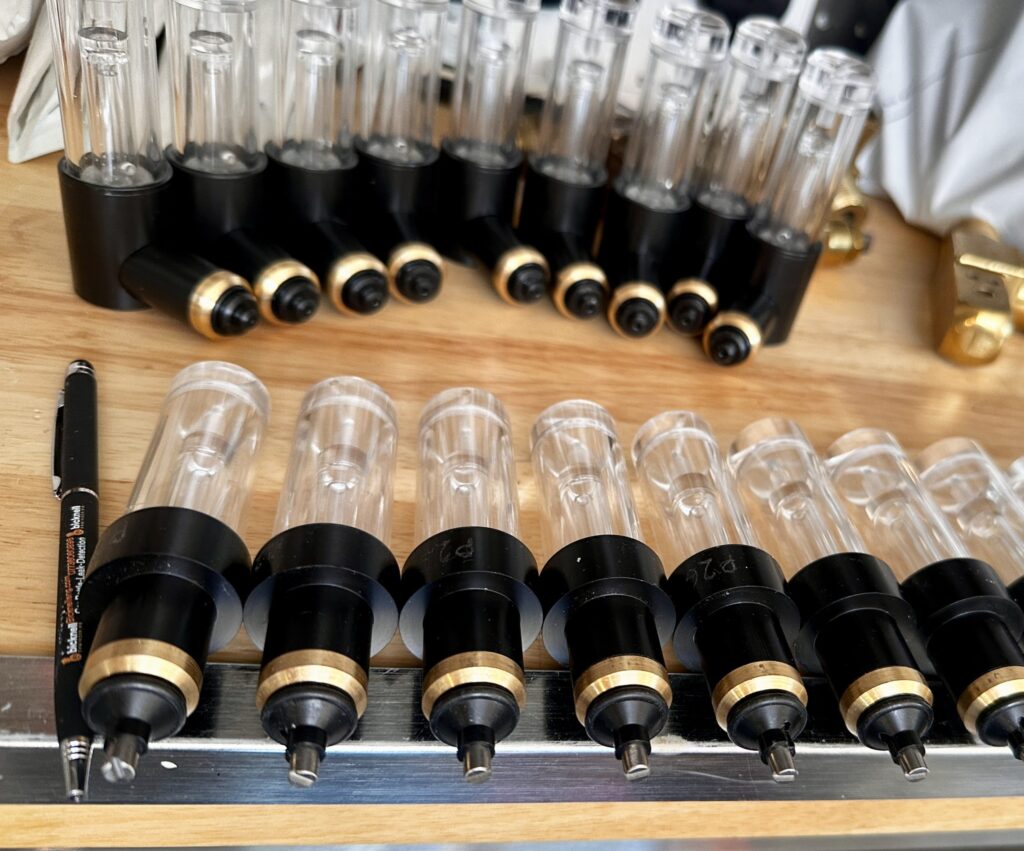
The Bicknell Bubbler has been specifically designed to provide a positive visual indication of a leak without applying leak-detection liquid directly to the cylinder valve.
The unique design allows the operator to connect directly to the valve and observe the result through the Bicknell Bubbler’s controlled detection chamber.
If it leaks, it bubbles.
Importantly, the detection liquid remains contained within the Bicknell Bubbler rather than being sprayed, brushed or applied onto the valve itself.
This means:
- No liquid is deliberately applied to the valve outlet.
- No liquid is left sitting around the valve.
- No wiping of the valve is required after every test.
- No contaminated rags are required.
- No cleaning operation is required simply because a leak test has been performed.
- The gas pathway is kept isolated from the detection medium.
- The operator receives a clear visual pass/fail indication.
It is not “water versus chemical” – it is liquid versus no liquid
This distinction is extremely important.
Changing from a chemical leak-detection fluid to water does not fundamentally change the underlying issue if the test method still involves putting liquid onto the valve.
Water is still a liquid.
If the objective is to maintain valve cleanliness and prevent the introduction of foreign material into a gas pathway, the better engineering solution is not necessarily to find a “cleaner” liquid.
It is to avoid putting liquid on the valve in the first place.
That is the principle behind the Bicknell Bubbler.
Contamination control
Gas valves and outlets are part of the gas delivery pathway. Introducing liquid into or around the outlet can create an unnecessary contamination risk, particularly where the cylinder is subsequently used for high-purity or medical gases.
For medical oxygen applications, cleanliness is especially important because oxygen equipment has additional requirements relating to contamination and materials.
The Bicknell Bubbler provides a method of checking for leakage while keeping the detection medium contained within the testing device rather than deliberately coating the valve outlet.
This makes the system particularly suited to environments where cleanliness, repeatability and contamination control are important considerations.
Eliminating the cleaning operation
A conventional liquid-applied leak test can create an additional process:
Apply liquid → inspect for bubbles → wipe valve → dispose of/wash cleaning materials → move cylinder on.
The Bicknell Bubbler removes much of that additional work:
Connect → test → observe → remove.
There is no requirement to wipe detection fluid from every valve after testing because the detection medium has not been applied to the valve in the first place.
That provides a significant operational advantage in a busy cylinder filling or testing environment.
Less cleaning means less:
- Labour
- Rags and wiping materials
- Waste
- Cleaning products
- Handling of potentially contaminated materials
- Production-line interruption
- Opportunity for operator error
- Risk of residual liquid remaining around the valve
For a facility testing hundreds or thousands of cylinders, these small individual tasks can become a substantial cumulative cost.
Flammable residues – an additional consideration
Some commercially available leak-detection fluids and products can contain substances that may leave residues or have flammable properties.
Where flammable gases are being handled, introducing additional substances into the workplace should be considered as part of the site’s risk assessment and control measures.
Under COSHH, employers must assess risks arising from hazardous substances and implement appropriate controls where applicable. (HSE)
The Bicknell Bubbler’s design helps reduce this unnecessary exposure by keeping the detection liquid contained within the test equipment rather than applying it directly to the cylinder valve.
Compliance and good engineering practice
The Bicknell Bubbler should not be viewed simply as another leak detector.
It is a controlled leak-detection method designed around the requirements of modern gas-cylinder operations.
UK pressure-system legislation places duties on those responsible for pressure systems to ensure that equipment is suitable for its intended purpose and safely maintained. The Pressure Systems Safety Regulations 2000 (PSSR) apply to qualifying pressure systems and specifically address risks associated with pressurised gases. (HSE)
For qualifying pressure equipment, the Pressure Equipment (Safety) Regulations also establish essential safety requirements for applicable equipment placed on the GB market. (HSE)
These regulations do not prescribe that every leak test must use one particular method. Rather, they reinforce the importance of using suitable equipment and appropriate procedures for the application and associated risks.
The Bicknell Bubbler provides a practical way of achieving leak detection while reducing the unnecessary introduction of liquid contamination at the valve.
The Bicknell Bubbler advantage
| Conventional liquid-applied testing | Bicknell Bubbler |
| Liquid applied to valve | No liquid applied to valve |
| Valve requires wiping | No wiping required |
| Rags/wipes required | No rags required |
| Cleaning process required | No post-test cleaning operation |
| Potential liquid residue | Detection liquid remains contained |
| Potential chemical exposure | Reduced handling of applied detection fluids |
| Additional waste | Minimal test-related waste |
| Operator must inspect applied liquid | Clear visual bubble indication |
| Additional labour | Faster, cleaner testing process |
| Risk of contaminating valve | Designed to prevent detection liquid contacting the valve |
A better way to leak test
The objective of leak detection is simple:
Identify a leaking valve before the cylinder is released.
There is no requirement to make that process unnecessarily complicated by applying liquid directly to the valve and then spending additional time cleaning it.
The Bicknell Bubbler provides a purpose-designed alternative: a direct, controlled leak-detection system where the detection liquid is contained within the device and the operator receives an immediate visual indication.
No liquid on the valve.
No mess.
No wiping.
No rags.
No unnecessary cleaning operation.
Just a clear indication — if it leaks, it bubbles.
For modern gas-cylinder filling and testing operations, the Bicknell Bubbler offers a cleaner, more efficient and contamination-conscious approach to leak detection, while supporting the broader requirements for safe and suitable pressure-system operations.
Bicknell Engineering
Leak detection should identify the leak – not create another cleaning problem.
Bicknell Bubbler: If it leaks, it bubbles